
Calling all Students! Register now to join our April 9th Session.
The Student Board is excited to host our inaugural Virtual Student Speed Mentoring Event. The Student Mentorship Session is always a very popular session at our Annual Symposium, and we are thrilled to invite students to join this online session featuring accomplished mentors from within our society. This fast paced event will include group discussion time, as well as multiple smaller, break-out sessions ensuring informative, intimate conversations with leading experts in the field to help your career growth.
The online session will be held on Thursday, April 9 or Friday, April 10, 2026 at the following times depending upon your local time zone:
- 8:00 - 9:00 (West Coast, USA/Canada) Thursday, April 9
- 11:00 - Noon (East Coast, USA/Canada) Thursday, April 9
- 16:00 - 17:00 (UK) Thursday, April 9
- 17:00 - 18:00 (Continental Europe) Thursday, April 9
- 23:00 - Midnight (China) Thursday, April 9
- Midnight - 1:00 (Korea and Japan) Friday, April 10
Registration for this event is required, and will be limited to the first 28 mentees that register. An email will be sent to all registered attendees with the Zoom Info on Monday, April 6th. We are managing a waitlist for this event, so you will be notified if you are in the session or on the waitlist.
Meet the Mentors!
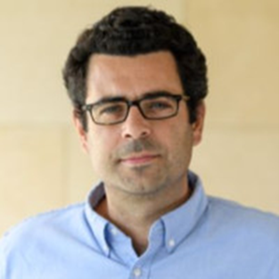
Costas Arvanitis is an associate professor at Georgia Institute of Technology whose research program focuses on biomedical acoustics and image guided ultrasound therapies for brain cancer and central nervous system disorders. He is internationally recognized for work on ultrasound biophysics and microbubble dynamics to modulate the neurovascular environment and tumor microenvironment for novel treatments.
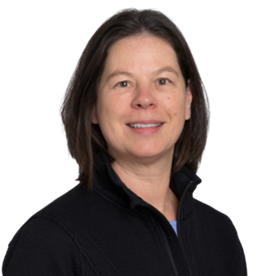
Isabelle Aubert is a professor in the Department of Laboratory Medicine & Pathobiology at the University of Toronto, and a Tier 1 Canada Research Chair in Brain Repair and Regeneration. Her team is exploring the use of transcranial focused ultrasound, guided by MRI, to modulate the blood-brain barrier, deliver therapeutics, reduce pathology and increase neuronal and glial plasticity.
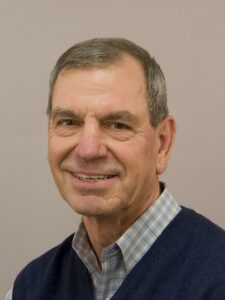
Dr. Lawrence A. Crum is a retired Principal Physicist at the Applied Physics Laboratory, Research Professor of Bioengineering and Electrical Engineering, and Founder and former Director of the Center for Industrial and Medical Ultrasound, all at the University of Washington in Seattle. He previously held positions at Harvard University, the U.S. Naval Academy, and the University of Mississippi, where he served as the F. A. P. Barnard Distinguished Professor of Physics and Director of the National Center for Physical Acoustics. He has published more than 220 articles in professional journals (Google Scholar h-index: 97; more than 30,000 citations), mentored over 50 graduate students and postdoctoral researchers (including 8 Litzzi Award winners, and 2 ISTU Presidents), and been awarded 22 patents. He also holds an honorary doctorate from the Université libre de Bruxelles.
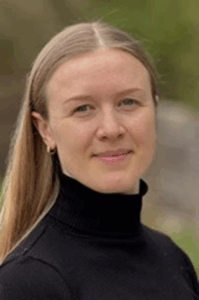
Rikke Hahn Kofoed is a postdoctoral fellow in the Department of Clinical Medicine and Neurosurgery at Aarhus University. Her research investigates gene therapy strategies for neurodegenerative disorders – such as Parkinson and Alzheimer disease – leveraging focused ultrasound to transiently open the blood–brain barrier and enable delivery to the central nervous system.
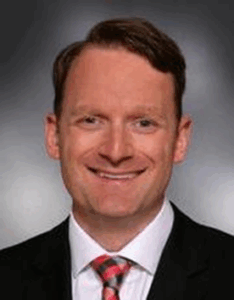
Kevin J. Haworth is an associate professor of Department Internal Medicine and Biomedical Engineering at the University of Cincinnati. His research explores bubble-enhanced ultrasound biotherapies, including passive cavitation imaging for histotripsy and drug delivery, acoustic droplet vaporization for gas scavenging and cardiovascular treatments, and ultrasound-mediated oxygen scavenging to inhibit reperfusion injury.
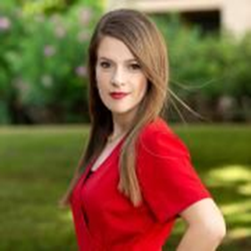
Tali Ilovitsh is an associate professor at the Department of Biomedical Engineering at Tel Aviv University. She is leading a translational program that develops therapeutic ultrasound methods for cancer and brain therapy using gas bubbles and low frequency ultrasound. Her lab pioneers biomedical ultrasound technologies, advancing imaging capabilities and developing transformative noninvasive therapies for cancer and brain diseases.
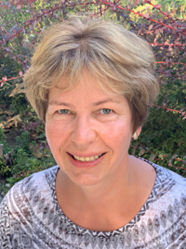
Vera A. Khokhlova is a professor in the Department of Acoustics at Lomonosov Moscow State University and senior principal engineer at the University of Washington's Center for Industrial and Medical Ultrasound. She specializes in nonlinear acoustics and therapeutic ultrasound, including HIFU bioeffects, shock wave focusing, and wave propagation modeling. Her research has been central to understanding ultrasound induced mechanical and thermal bioeffects and improving the safety and efficacy of HIFU therapies.
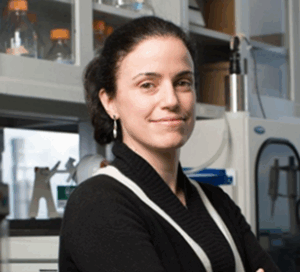
Elisa Konofagou is a professor in the Department of Biomedical Engineering and Radiology at Columbia University. Her group designs ultrasound-based technologies for tissue mechanics imaging and has pioneered methods for noninvasive brain drug delivery and neuromodulation of the central and peripheral nervous systems.
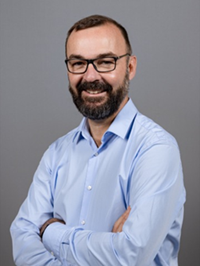
Cyril Lafon is research director and head of LabTAU (Laboratory of Therapeutic Applications of Ultrasound, INSERM Unit 1032) in Lyon. His group specializes in ultrasound wave propagation modeling, therapeutic devices for thermal ablation and drug delivery, and ultrasound communication.
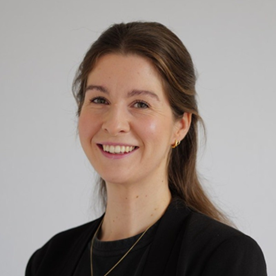
Harriet Lea-Banks is an assistant professor in the Department of Medical Physics and Biomedical Engineering at University College London. Previously at Sunnybrook Research Institute, her team developed ultrasound-sensitive agents for neurological diseases and neuromodulation.
Sophie Morse is an assistant professor in the Department of Bioengineering at Imperial College London whose work centers on focused ultrasound for modulation and targeted drug delivery to the brain. Her work explores focused ultrasound modulation of microglia, astrocytes, and neuronal signaling to identify novel strategies to treat and delay the onset of disorders, including neurodegenerative diseases, cognitive decline, and tumours.
Antonios Poulopoulos is a senior lecturer in therapeutic ultrasound in the Department of Surgical and Interventional Engineering at King's College London. His research explores the use of focused ultrasound–mediated blood–brain barrier opening to enable drug delivery in the brain, including approaches that harness microbubble dynamics to improve the treatment of neurological diseases.
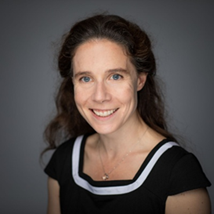
Eleanor Stride is a statutory professor at the University of Oxford’s Institute of Biomedical Engineering, who specializes in nano- and microscale technologies for targeted drug delivery. Her group develops ultrasound responsive and magnetically targetable particles that have enabled localized delivery of conventional drugs and biological therapeutics such as DNA and siRNA.
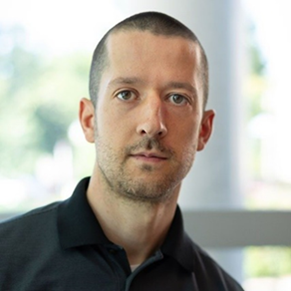
Eli Vlaisavljevich is an associate professor in the Department of Biomedical Engineering at Virginia Tech. His group investigates ultrasound-tissue interactions for noninvasive therapies, spanning histotripsy ablation for cancer, nanoparticle-mediated histotripsy, focused ultrasound for drug delivery and neuromodulation, acoustically active biomaterials, and ultrasound-guided tissue regeneration. The lab also pioneers biomedical technologies for conservation, with clinical translations including veterinary tumor treatments and partnerships like HistoSonics for FDA-approved liver cancer trials.