Our April webinar was a special session of the "Rising Scientists in Therapeutic Ultrasound" series featuring topics related to "Technical Advances". This series provides postdocs and early career scientists (Asst Prof.) a platform to share their work with our society.
This session featured:
- Fenfang Li, Ph.D. from Shenzhen Bay Laboratory, China presenting: "Cross-Scale Mechanistic Insights into Pulse-Length Dependent BBB Opening and Neurological Therapy"
- Taylor Webb, Ph.D. from University of Utah presenting: "MR-Guided Transcranial Ultrasound Neuromodulation Therapy"
- Ellen Yeats, Ph.D. from University of Michigan presenting: "An Adaptive Method to Reduce Heating at the Ribs during Histotripsy Treatment"
This session was moderated by Dr. Mitra Aliabouzar from the University of Michigan.
About the Speakers
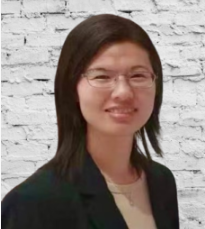
Dr. Fenfang Li is a Principal Investigator at Shenzhen Bay Laboratory, a position she has held since 2022. Her research integrates multidisciplinary approaches to investigate microbubble dynamics, sonoporation, sonogenetics, ultrasound-induced calcium signaling, and mechanotransduction, with the goal of advancing safe and efficient drug delivery and non-invasive neuromodulation. Dr. Li obtained a bachelor’s degree at Wuhan University in 2010, completed her Ph.D. studies with Prof. Claus Dieter Ohl from Nanyang Technological University, Singapore, in 2015. She then conducted postdoctoral research with Prof. Pei Zhong at Duke University, USA and later at the Lee Kong Chian School of Medicine, Singapore. Her work has been published in journals including PNAS, Theranostics, Ultrasonics Sonochemistry, Biophysical Journal, Ultrasound in Medicine and Biology, and Physical Review Fluids, and has been featured in media such as Phys.org and EurekAlert!. Dr. Li has received the Guangdong Pearl River Talents Program for Young Top-notch Talent, and the Pengcheng Peacock Plan Specially Appointed Position. She has been an invited speaker at ICU 2023, WACBE 2024, and IC-UEBA 2025, and has served as session chairs at international conferences including international symposium on cavitation. Dr. Li is a reviewer for journals including Theranostics, Small, Npj Acoustics and Ultrasound in Medicine and Biology. She also served as a Topic Editor for Frontiers in Neuroscience and is a faculty advisor for the student board for ISTU since 2024.
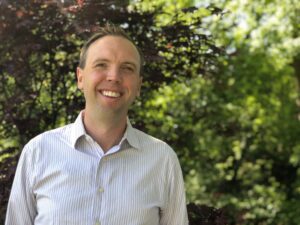
Dr. Taylor Webb is an Assistant Professor of Radiology and Imaging Sciences at the University of Utah, where he develops transcranial ultrasound neuromodulation therapies. His research integrates early-phase clinical trials, patient-specific treatment guidance, and mechanistic studies to optimize therapeutic protocols and enable robust treatments across diverse patient populations. Dr. Webb earned his PhD from Stanford University, where he studied the propagation of ultrasound through the human skull. During his postdoctoral fellowship at the University of Utah, he developed a preclinical model demonstrating ultrasound-based modulation of behavior in awake subjects.
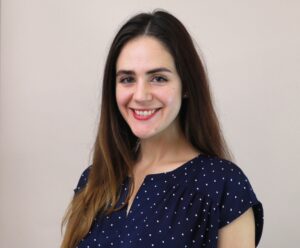
Dr. Ellen Yeats is a Postdoctoral Research Fellow in the Department of Biomedical Engineering at the University of Michigan (Ann Arbor, Michigan, USA) and member of the Histotripsy Lab, where she is advised by Dr. Zhen Xu and Dr. Timothy Hall. She received her B.S.E. in Biomedical Engineering from Vanderbilt University in 2017 and her Ph.D. in Biomedical Engineering from the University of Michigan in 2024. In 2025, Dr. Yeats was awarded an NIH T32 Training Fellowship through the Michigan Translational Imaging Program (M-TIP) with the Department of Radiology of University of Michigan Medicine, where she is working with Dr. Shane Wells to develop improved imaging guidance and targeting for histotripsy. The aim of Dr. Yeats’ research is to develop technologies that optimize acoustic energy delivery to the body for histotripsy therapy. Towards this aim, she has investigated and developed methods to adaptively correct phase aberration and reduce heating at the ribs during transabdominal histotripsy. In her future research, Dr. Yeats aims to leverage advanced acoustic energy delivery methods to expand histotripsy applications to new, challenging therapy targets in the pelvis and spine.
About the Moderator
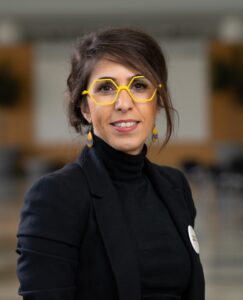
Dr. Mitra Aliabouzar received her Ph.D. in Mechanical and Aerospace Engineering from the George Washington University in 2018. She then completed a postdoctoral fellowship at the University of Michigan and promoted to a Research Assistant Professor in 2022. Dr. Aliabouzar’s research specializes in integrating acoustics, mechanics, and material science to advance biomedical applications of ultrasound.
The key technique utilized is acoustic droplet vaporization (ADV), which is the vaporization of perfluorocarbon liquid droplets using short ultrasound pulses. Dr. Aliabouzar’s focus is on comprehending the fundamental physics of ADV, essential for tailoring its use in specific applications like in situ microrheology and guided drug delivery.
She has over 35 peer-reviewed publications in scientific journals and over 50 conference abstracts. She is the recipient of the Michigan Medicine Bold Research Award (2024). She is a member of the Acoustical Society of America, the American Institute of Ultrasound in Medicine, and the International Society of Therapeutic Ultrasound.